
Why Early Intervention for Oral Development Matters
When you look at a newborn, it is easy to fixate on the milestones you can see. You watch for the first smile, the first roll, and the first step. In the world of oral health, most parents are trained to wait for the first tooth. The common belief is that dental care begins when that first pearly white erupts through the gum line.
However, the architecture of your child’s face, airway, and future smile is being built long before teething begins. The way a baby swallows, breathes, and rests their tongue dictates the growth of their jaw and the development of their facial bones. When these subtle functions are off-balance, it can lead to a domino effect of health challenges that last well into adulthood.
At Evergreen Pediatric & Airway Dentistry, we view oral health through a wider lens. We don’t just look at teeth; we look at the entire structure of the mouth and how it connects to the rest of the body. By prioritizing early intervention, we can identify developmental red flags in infancy and guide your child’s growth toward optimal health. Waiting for problems to become visible often means waiting until they are harder to fix. Here is why early dental care intervention is the key to a lifetime of healthy breathing, sleeping, and smiling.
The Foundation of Oral Health: It Starts Before the First Tooth
The human face is a marvel of biological engineering, and the most critical construction phase happens in the first few years of life. The growth of the upper and lower jaws (the maxilla and mandible) is not genetically set in stone; it is heavily influenced by muscle function.
The tongue is the primary architect of the upper jaw. In an ideal scenario, the tongue rests gently against the roof of the mouth (the palate) when the mouth is closed. The pressure of the tongue acts as a natural scaffold, widening the palate and pushing it forward. This creates a broad, U-shaped arch that has plenty of room for teeth to come in straight.
However, if an infant cannot raise their tongue to the roof of the mouth—perhaps due to a physical restriction or low muscle tone—the palate does not get that internal support. Instead of a wide arch, the palate can become high, narrow, and V-shaped.
This narrowing doesn’t just mean crooked teeth later on. The roof of the mouth is also the floor of the nasal cavity. A high, narrow palate often equals a smaller nasal floor, which means less room for airflow. These structural foundations are laid in the first months of life, impacting how an infant eats, how they breathe, and eventually, how they speak.
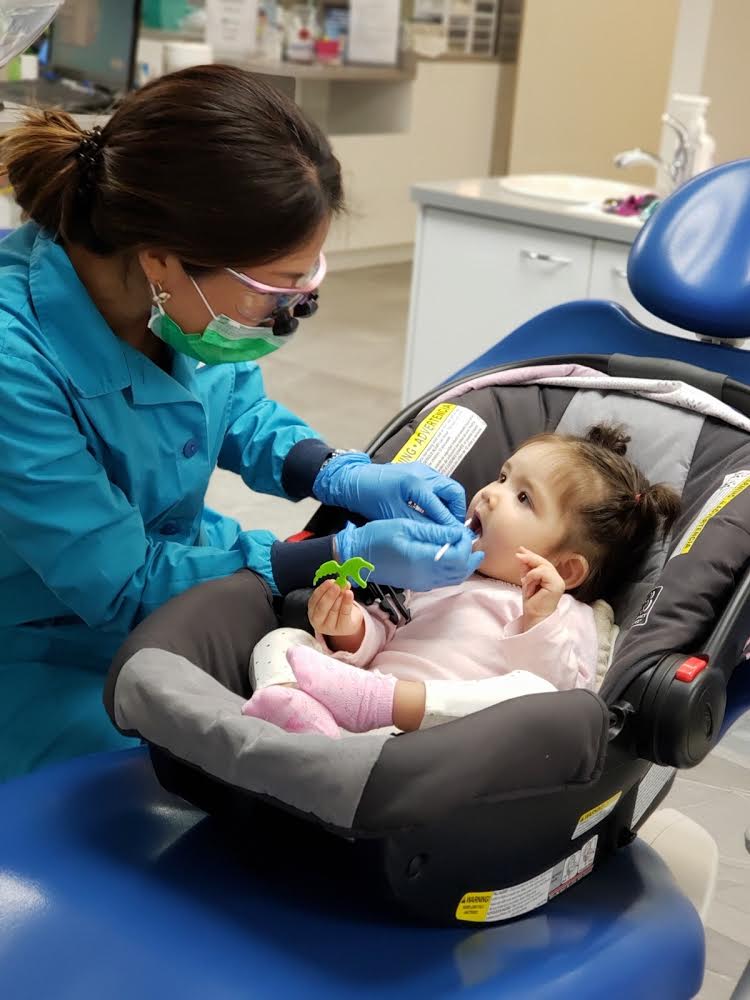
Early Dental Intervention
The Paradigm Shift: From Reactive to Proactive Dentistry
For decades, the standard approach to pediatric dentistry was reactive. Dentists would watch teeth come in crooked, wait until the child was a teenager, and then extract teeth or use heavy mechanics to force them into alignment. This “watch and wait” philosophy often ignored the underlying causes of the crowding.
We are in the midst of a necessary paradigm shift. Proactive dentistry asks why the teeth are crowded in the first place. Instead of waiting for a problem to fully manifest, we intervene while the child is still growing.
Evergreen Pediatric & Airway Dentistry champions this proactive model. By guiding the growth of the jaws while the bones are still malleable, we can create sufficient space for all the permanent teeth. This approach, known as dentofacial orthopedics, focuses on correcting the bone structure and muscle function first. When the foundation is solid and spacious, the teeth have a much better chance of aligning naturally, often reducing the need for invasive orthodontics or extractions in the teenage years.
Common Oral Development Issues in Infants and Toddlers
To practice early intervention, parents and providers must know what to look for. Several common developmental hurdles can derail the natural growth of the jaw and face.
Tethered Oral Tissues (TOTs)
Commonly known as tongue-ties and lip-ties, these occur when the frenulum (the band of tissue connecting the tongue to the floor of the mouth or the lip to the gum) is too tight or thick. A tongue-tie restricts the tongue’s ability to elevate to the roof of the mouth. Without that resting pressure, the upper jaw may not develop its full width.
Improper Jaw Alignment
Sometimes, a child’s lower jaw may be set too far back (retrognathia). While some babies are naturally born with a slightly recessed chin, functional issues can exacerbate this. If a child cannot breastfeed properly or relies heavily on bottle feeding with poor mechanics, the muscles required to pull the jaw forward may not develop sufficiently.
Mouth Breathing
This is perhaps the most critical red flag. Infants are obligate nasal breathers. If a baby is breathing through their mouth, it signals an obstruction or a habit that needs correction. When the mouth is open, the tongue drops to the floor of the mouth, and the cheeks push inward on the upper jaw. This pressure restricts growth, leading to a long, narrow face and a crowded smile.
Left untreated, these issues do not self-correct. They compound over time, turning what could have been a minor soft-tissue correction in infancy into a major structural problem in adolescence.
The Role of Oral Development in Breathing and Sleep
The connection between oral health and the airway is profound. The structure of the jaws defines the size of the airway tube. A small, underdeveloped jaw leaves less room for the tongue. When a child with a small jaw lies down to sleep, gravity pulls the tongue backward, potentially blocking the airway.
This physical blockage is a leading cause of Pediatric Obstructive Sleep Apnea (OSA) and Sleep Disordered Breathing (SDB). While we often associate sleep apnea with adults who snore loudly, it manifests differently in children.
Symptoms of poor sleep and airway issues in children include:
- Bedwetting past the age of potty training.
- Grinding teeth (bruxism) at night.
- Hyperactivity or difficulty focusing (often misdiagnosed as ADHD).
- Sleeping in odd positions (head tilted back or butt in the air) to open the airway.
- Audible breathing or snoring.
Dr. Susan and the team at Evergreen Pediatric & Airway Dentistry specialize in airway-focused care. By expanding the dental arches and ensuring the jaws are positioned correctly, we physically enlarge the space available for breathing. This allows for better oxygen saturation at night, leading to more restorative sleep and a healthier, happier child during the day.
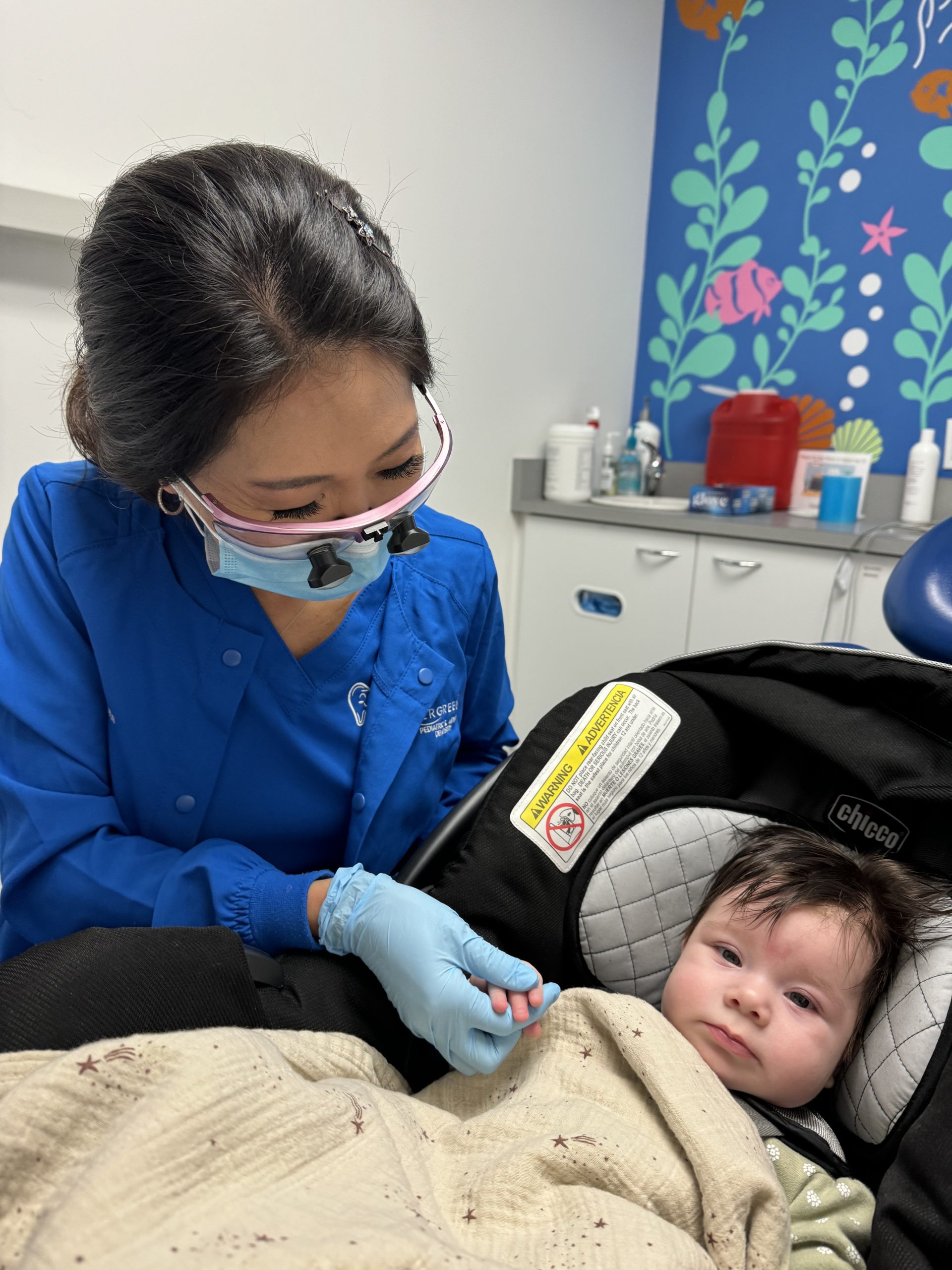
Early Dental Care
Eating and Speaking: The Oral Development Connection
Oral function is the baseline for two of life’s most essential activities: eating and communicating.
Feeding and Swallowing
The act of chewing and swallowing requires complex coordination between the tongue, cheeks, and jaw muscles. If a child has poor oral development or a tongue restriction, they may struggle to manage solid foods. You might notice your child gagging easily, pocketing food in their cheeks like a chipmunk, or being labeled a “picky eater” because they refuse textures that are difficult to chew. Correcting the oral architecture allows the child to manipulate food safely and effectively, turning mealtime from a struggle into a pleasure.
Speech Articulation
Speech is a fine motor skill. Many sounds, particularly T, D, N, L, S, and Z, require the tongue to elevate and make contact with the roof of the mouth. If the palate is too high or the tongue is tied down, the child physically cannot reach the necessary contact points. This often results in a lisp or “mushy” speech. While speech therapy is invaluable, it can be an uphill battle if the underlying anatomy is working against the child. Early dental intervention clears the path for successful speech development.
Preventing Future Problems: The Long-Term Benefits
Investing in early intervention is an investment in your child’s future quality of life. The benefits extend far beyond a cosmetic smile.
By guiding jaw growth early, we significantly reduce the likelihood of needing permanent tooth extractions for orthodontics. We create a skeletal structure that supports the soft tissues of the face, which can age better and maintain a balanced profile.
Furthermore, addressing airway issues in childhood can prevent a lifetime of cardiovascular stress. Sleep apnea is linked to high blood pressure, heart disease, and metabolic issues in adults. By ensuring a patent (open) airway during the crucial developmental years, we are setting the stage for systemic health.
There is also a social-emotional component. Children who sleep well, speak clearly, and feel confident in their smiles interact with the world differently. Removing the physical barriers to their development allows their personalities to shine without the fatigue of poor sleep or the frustration of speech impediments.
What Parents Can Do: Tips for Supporting Oral Development at Home
As a parent, you are the first line of defense. You see your child every day, and your observations are valuable data points for us. Here are several ways you can support healthy oral development at home:
- Monitor Mouth Breathing: Watch your child when they are watching TV or playing on a tablet. Are their lips sealed, or are they hanging open? If you see their mouth open, gently remind them to close it. If they physically cannot breathe through their nose, this warrants an evaluation.
- Encourage Chewing: Our modern diet is very soft (pouches, nuggets, purees). The jaw bone requires stress to grow. Encourage your child to chew harder foods like raw carrots, celery, or specialized chewing tools. This “gym workout” for the jaw stimulates bone density and growth.
- Watch the Sleep: Listen to your child sleep. Silence is golden. Snoring, heavy breathing, or gasping are not normal sounds for a child.
- Evaluate Habits: Prolonged use of pacifiers or thumb-sucking can warp the shape of the jaw, pushing the front teeth forward and narrowing the palate. We can offer strategies to help wean these habits before they cause permanent structural changes.
- Check Tongue Posture: Ask your child to hold their tongue on the “spot” (the bumpy ridge right behind the top front teeth). Make it a game. This trains the tongue to rest in the correct position.
At Evergreen Pediatric & Airway Dentistry, we view parents as partners. We provide education and resources to help you foster these good habits at home, reinforcing the clinical work we do in the office.

Infant Oral Care
Why Choose Evergreen Pediatric & Airway Dentistry for Your Child’s Oral Health
Choosing a dental home for your child is a big decision. You need a provider who sees the whole picture. Dr. Susan and the team at Evergreen Pediatric & Airway Dentistry are not just looking for cavities; we are looking for potential.
Our practice is built on the philosophy that form follows function. We have pursued advanced training in airway dentistry and early intervention techniques because we believe every child deserves the ability to breathe, sleep, and thrive. We utilize state-of-the-art diagnostic tools to assess craniofacial development, but we pair that technology with a gentle, compassionate approach that puts children at ease.
We understand that airway and development issues can be overwhelming for parents. We are here to demystify the process, providing clear answers and a customized roadmap for your child’s health. Whether it is a simple habit correction or a comprehensive growth guidance plan, we are committed to being your partners in this journey.
Building a Healthy Future, One Smile at a Time
The window of opportunity for facial growth is fleeting. By the age of six, the majority of a child’s facial development is already complete. Waiting for all the permanent teeth to arrive before consulting a dentist can mean missing the most critical years for structural correction.
Early intervention for oral development is about more than avoiding braces. It is about ensuring your child has the airway to run, the sleep to learn, and the confidence to speak up. It is about building a foundation for health that will support them for the rest of their lives.
If you suspect your child is mouth breathing, struggling with sleep, or showing signs of a restricted tongue, do not wait. Schedule a consultation with Evergreen Pediatric & Airway Dentistry today. Let us help your child grow, breathe, and smile into a brighter future.
Evergreen Pediatric & Airway Dentistry
Dr. Susan Kim
12910 Totem Lake Blvd NE #103
Kirkland, WA 98034
(425) 814-3196
Get Directions on Google Maps
evergreenkidsdentist.com