
Gentle Ways to Help Infants Adjust to Their First Dental Visit
Becoming a parent involves a never-ending series of “firsts.” First steps, first words, first foods—and inevitably, the first dental visit. While it might not seem as momentous as a first birthday party, that initial trip to the dentist is a critical milestone in your child’s health journey.
It’s natural to feel a little anxious. Will the baby cry? Will they open their mouths? Is it too early? These are common questions swirling in the minds of new parents. However, establishing a “dental home” early on is one of the best gifts you can give your child. It sets the stage for a lifetime of healthy smiles and helps normalize the dentist’s office as a safe, helpful place rather than a source of fear.
This guide will walk you through everything you need to know about navigating this milestone with grace and confidence. From timing the visit correctly to choosing the right provider, we will explore gentle, practical ways to ensure your infant’s first dental experience is a positive one.
When Should Your Baby Have Their First Dental Visit?
One of the most common questions parents ask is, “When do I actually need to make that first appointment?”
The American Academy of Pediatric Dentistry (AAPD) and the American Dental Association (ADA) both recommend that a child see a dentist by their first birthday or within six months of the eruption of their first tooth—whichever comes first.
Why So Early?
It might seem premature to bring a baby with only one or two tiny teeth to a doctor, but early prevention is key. Dental problems can begin as soon as teeth appear. “Baby bottle tooth decay” (early childhood caries) is a common but preventable condition that can cause pain and infection in infants.
Visiting the dentist early allows for:
- Risk Assessment: A dentist can evaluate your child’s specific risk for cavities based on diet, hygiene, and family history.
- Guidance: You get professional advice on teething, thumb-sucking, and pacifier use.
- Acclimatization: The earlier a child visits, the more familiar they become with the sights, sounds, and smells of the dental office.
Addressing Common Misconceptions
Many parents believe they should wait until their child has a full set of baby teeth (around age 2 or 3) before scheduling a visit. Unfortunately, by this age, some children may already have cavities or decay that requires treatment. Waiting until there is a problem often means the first visit is associated with pain or an invasive procedure, which can trigger long-term dental anxiety.
Think of the age-one visit as a “well-baby check” for teeth. It’s quick, usually painless, and focuses heavily on education for the parents rather than treatment for the child.
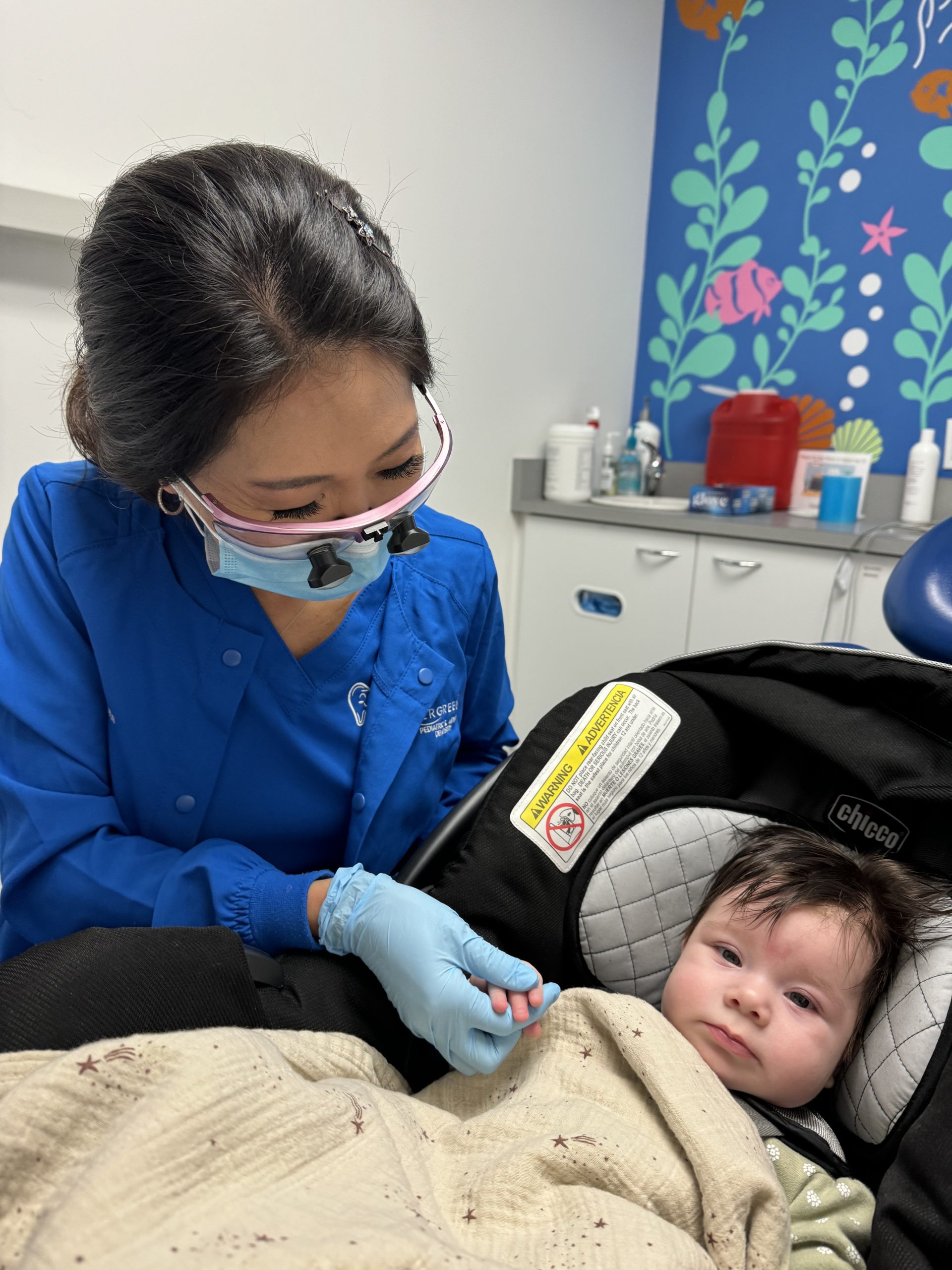
Infant First Dental Visit
Tips for Choosing a Pediatric Dentist Who Specializes in Infant Care
Not all dentists are created equal when it comes to treating infants. While general dentists are qualified to treat patients of all ages, pediatric dentists receive two to three years of additional specialty training after dental school. This training focuses specifically on the unique psychological, developmental, and dental needs of children, from infancy through adolescence.
What to Look For
When searching for a dental home for your baby, consider the following:
- Credentials and Experience: Confirm they are a board-certified pediatric dentist.
- Office Environment: Is the waiting room kid-friendly? Are the staff warm and welcoming? A pediatric office is often designed with bright colors, toys, and smaller equipment to make children feel at ease.
- Approach to Care: Ask about their philosophy on behavior management. Do they allow parents in the treatment room? (For infants, the answer should almost always be yes). How do they handle a crying baby? A compassionate provider will expect some fussiness and handle it with patience.
The Evergreen Difference
Finding a practice that truly understands airway health alongside dental health is a significant bonus. Evergreen Pediatric & Airway Dentistry stands out as a trusted option for specialized infant dental care. Their approach goes beyond just checking for cavities; they look at the whole child. They assess oral restrictions (like tongue-ties) and airway issues that could impact feeding, sleeping, and speech development. Choosing a provider with this holistic view ensures your infant is thriving, not just surviving teething.
Preparing Your Infant (and Yourself) for the First Visit
Preparation starts at home. While you can’t sit a 10-month-old down for a logical conversation about oral hygiene, you can influence their emotional state through your own behavior and play.
Role-Playing and Play
Children learn through play. Even before they can talk, they are observing interactions.
- The “Dentist” Game: Use a stuffed animal or doll. Pretend to count the toy’s teeth with a soft toothbrush or a clean finger. Cheer when the toy “opens wide.”
- Knee-to-Knee Practice: Practice the position used in the dental office. Sit on the floor or a bed with another adult, facing each other with your knees touching. Lay your baby down so their head is in the other adult’s lap while their body is on yours. This mimics the exam position and helps the baby get used to being reclined while looking up at a face.
Reading Books
There are countless colorful board books available that depict a trip to the dentist. Reading these stories repeatedly helps normalize the concept. Look for books with happy characters and positive outcomes. Even if the infant doesn’t understand every word, the positive tone and imagery settle in their subconscious.
Managing Parental Anxiety
Here is a hard truth: babies are emotional sponges. If you are nervous, they will sense it. Many parents harbor their own dental anxieties, perhaps stemming from negative childhood experiences.
To create a calm environment:
- Watch Your Language: Avoid using words like “pain,” “shot,” “drill,” or “hurt,” even if you are saying, “It won’t hurt.” The baby focuses on the tone and the tension.
- Stay Calm: Take deep breaths. Treat the visit as a normal, routine errand, just like going to the grocery store.
- Schedule Wisely: Don’t schedule the appointment during nap time or a typical mealtime. A hungry or tired baby is a recipe for a difficult visit. Aim for the morning when young children are typically freshest and happiest.
What to Expect During the First Dental Visit
Knowing what happens during the appointment can alleviate fear of the unknown. An infant dental exam is surprisingly simple and non-invasive.
The “Knee-to-Knee” Exam
You likely won’t be asked to sit in the big dental chair while holding your baby in an awkward position. Most pediatric dentists use the “knee-to-Knee” technique mentioned earlier.
- You sit knee-to-knee with the dentist.
- You place your child on your lap, facing you.
- You slowly lay the child back so their head rests on the dentist’s lap.
- This allows the child to see you the entire time while giving the dentist a clear view of the mouth.
The Clinical Check
The dentist will use a soft mirror to gently inspect your child’s gums, jaw, and bite. They will check any existing teeth for decay and look for oral issues like thrush or frenulum attachments (tongue-ties). They may apply a fluoride varnish if necessary.
The Education Portion
The bulk of the visit is actually a conversation between you and the doctor. They will discuss:
- Teething milestones and how to manage discomfort.
- Proper dental brushing and flossing techniques for infants.
- Dietary habits (bottles, sippy cups, snacking).
- Fluoride needs.
- Oral habits like thumb-sucking.
At Evergreen Pediatric & Airway Dentistry, this educational component is prioritized. They ensure parents leave feeling empowered, not scolded. The environment is designed to be stress-free, recognizing that a crying baby during an exam is normal and handled with speed and gentleness.
Making the Visit Fun and Positive
The goal is to leave the office with a smile. Even if there were a few tears during the exam, the recovery is what matters most.
Comfort Items
Bringing a beloved security object, such as a stuffed animal, blanket, or toy, provides a sense of familiarity and safety. These items can help ease anxiety, making the experience in an unfamiliar or sterile environment more comforting.
Positive Reinforcement
Praise your child frequently with soothing and encouraging words like, “You’re so brave!” or “I’m so proud of you!” Acknowledge their efforts with genuine enthusiasm. Celebrate rewards like stickers or toys by emphasizing their importance, creating positive associations with the dental visit experience.
The Environment Matters
This is where choosing a specialized office like Evergreen Pediatric & Airway Dentistry pays off. A child-friendly waiting room with books or sensory toys distracts the child before the appointment begins. Staff who know how to blow bubbles, make funny faces, or sing songs can distract an infant long enough to get the exam done without a meltdown. When the environment is built for kids, the kids feel like they belong there.
Establishing Healthy Oral Care Habits at Home
The dentist is only one piece of the puzzle. The real work happens in your bathroom every morning and night. Consistency at home reinforces that oral care is a non-negotiable part of life, just like diaper changes and baths.
Cleaning Gums
You don’t need to wait for teeth to start cleaning. Use a soft, damp washcloth or a silicone finger brush to gently wipe your baby’s gums after feedings. This clears away bacteria and gets them used to the sensation of having someone work in their mouth.
Brushing Tiny Teeth
As soon as that first tooth breaks through, switch to a soft-bristled infant toothbrush.
- Toothpaste: Use a tiny smear (the size of a grain of rice) of fluoride toothpaste.
- Technique: Brush gently on the inside and outside surfaces of the tooth.
- Flossing: Once two teeth touch, you need to start flossing them.
Consistency is Key
Make it a routine. Brush in the morning and right before bed. If your child fights it, try singing a specific “toothbrushing song” or letting them hold the brush for a turn (before you do the real brushing). If you make it routine and fun at home, the dentist doing the same thing won’t feel so foreign.
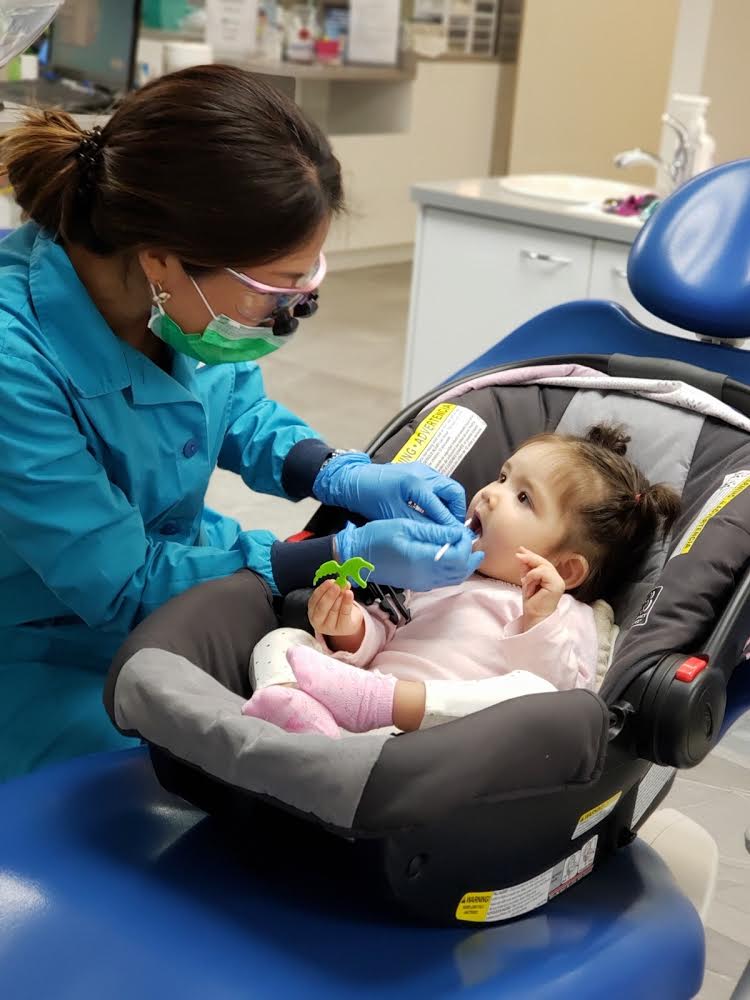
Infant Dental Visit
The Long-Term Benefits of Early Dental Care
Investing time and energy into these early visits yields massive dividends as your child grows.
Prevention of Dental Anxiety
Fear of the dentist is often learned or developed through traumatic experiences. By starting visits when the child is an infant—and when treatment is likely unnecessary—you build a bank of positive experiences. The dentist becomes a friendly person who counts teeth, not a scary doctor who causes pain.
Healthier Outcomes
Early detection prevents complex dental problems, leading to simpler, less invasive treatments. Spotting enamel weakness early allows for preventive care like fluoride treatments instead of fillings. Addressing airway issues in time enhances sleep quality, positively influencing growth and behavioral development. Regular dental visits ensure a proactive approach to maintaining overall health and well-being.
Evergreen Pediatric & Airway Dentistry supports families through every stage of this growth. By focusing on comprehensive care, they ensure that your child’s oral health supports their overall systemic health. Their specialized approach means they are partners in your parenting journey, watching your child grow from that first toothless grin to a full smile of healthy teeth.
Start Your Child’s Smile Journey Today
Your infant’s first dental visit is a rite of passage. It marks the beginning of a lifetime of health. By preparing gently, staying calm, and choosing the right provider, you can turn a potential source of stress into a positive, routine part of growing up.
Don’t wait until a problem arises. If your little one is approaching their first birthday or has cut their first tooth, it is time to schedule that first visit. Reach out to Evergreen Pediatric & Airway Dentistry today to book an appointment. Let their expert team guide you and your baby toward a future of bright, healthy smiles.
Evergreen Pediatric & Airway Dentistry
Dr. Susan Kim
12910 Totem Lake Blvd NE #103
Kirkland, WA 98034
(425) 814-3196
Get Directions on Google Maps
evergreenkidsdentist.com