You spotted a chalky white mark on a tooth and started reading about natural remineralization. Dr. Susan Kim earned her dental degree at Columbia University College of Dental Medicine. She completed a postdoctoral program in pediatric dentistry at Columbia right after that. Kirkland parents bring her these exact questions during preventive care for growing kids.
Here is what makes this topic tricky for any parent doing late night research. Half the internet promises that coconut oil and diet changes will fix a cavity. The truth sits somewhere in between, and the difference matters for your child. Her holistic approach to children’s dentistry draws that line clearly for parents. Any good pediatric dentist in Kirkland should be willing to do the same.
What Does It Mean to Remineralize a Child’s Tooth?
Your child’s enamel loses and regains minerals every single day of their life. Bacteria feed on sugar, make acid, and pull calcium and phosphate out of the surface. Saliva then washes in and puts some of those minerals back where they belong. Washington data shows 53 percent of third graders have already experienced tooth decay. Remineralization means tipping that daily exchange back toward repair instead of loss.
Think of it as a tug of war happening quietly inside your child’s mouth. Frequent snacking keeps the acid side pulling hard for hours at a time. Water, saliva, and the right toothpaste give the repair side something to work with. Nobody wins that contest permanently, which is why daily habits beat any single product. Parents often want one purchase to solve it, and no such purchase exists. What you change at breakfast matters more than what sits by the sink.
Which Signs Mean My Child’s Enamel Is Losing Minerals?
Early mineral loss looks like a dull chalky patch, usually right along the gumline. Washington saw untreated decay in 19 percent of third graders during the 2023 to 2024 Smile Survey. That figure sat at 12 percent in 2016, so more kids are slipping through. Parents often notice the visual clues weeks before a dentist ever sees them. Watch for these particular signs the next time your child brushes:
- Chalky white spots appear
- Front teeth look dull
- Edges look slightly see-through
- Cold drinks cause sensitivity
- Food packs into grooves
- Brown or dark marks form
A white spot is not a cavity yet, and that distinction is genuinely good news. It means the surface is still intact and minerals can still move back in. Dr. Susan checks these spots at every visit and tracks whether they grow or fade. Bring your phone photos if you first noticed something months ago. A comparison over time tells Dr. Susan far more than a single glance does.
Which Remineralizing Option Is Right for My Child?
The right choice depends on your child’s cavity risk, age, and what your family prefers. One year randomized trial followed 207 children using either hydroxyapatite or fluoride toothpaste. Researchers found the fluoride-free option performed no worse over that period. Dr. Susan offers both paths and picks based on each child’s risk profile. Compare what each of these four options genuinely does for enamel.
| Option | What it does | Where it happens | What it will not do |
| Saliva and diet changes | Supplies minerals and clears acid away | At home, all day | Repair a tooth that already has a hole |
| Hydroxyapatite toothpaste or varnish | Puts mineral back into softened enamel | Home and office | Replace a filling that is needed |
| Fluoride toothpaste or varnish | Hardens enamel and slows acid damage | Home and office | Work without consistent daily use |
| Silver diamine fluoride | Stops an active cavity from spreading | In the office only | Restore the shape of the tooth |
Her preventive page describes hydroxyapatite varnish as the fluoride-free option for families who want it. It also notes that she recommends supplemental fluoride when a child’s risk calls for it. That is a real choice, not a marketing position, and you get to weigh in. Results vary with diet, saliva, and how early anyone catches the problem.
What Should Our Home Routine Look Like?
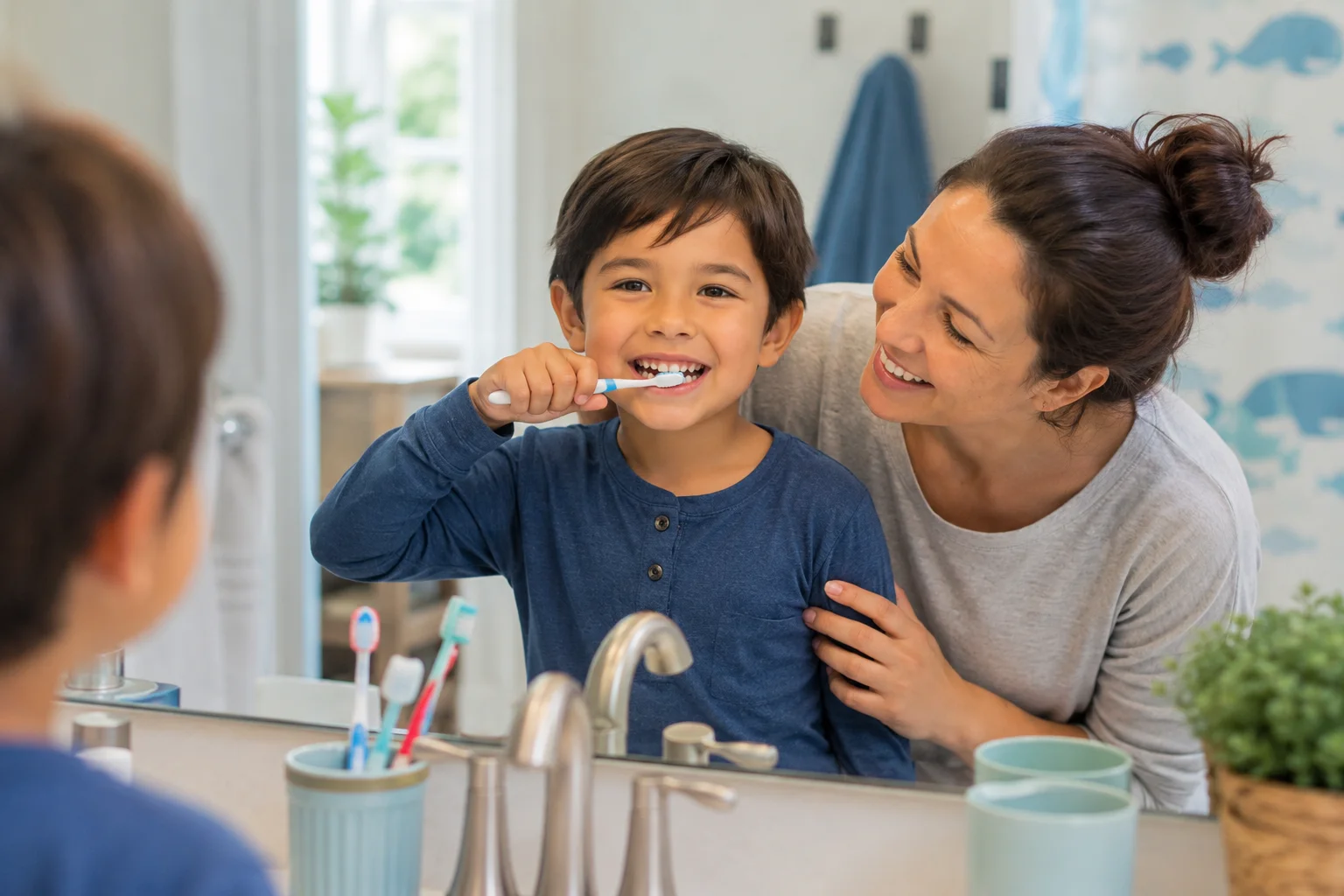
Home routine matters more than any single product sitting on your bathroom counter. Brushing twice daily for two full minutes remains the foundation of everything else. The bigger lever is usually frequency, since constant grazing keeps acid levels high all day. Dry mouth works against you too, which ties this straight into how your child breathes. Build your family routine around this handful of daily habits:
- Brush twice, two minutes
- Use remineralizing toothpaste nightly
- Rinse with water after snacks
- Swap sticky snacks for crunchy
- Stop all day grazing
- Encourage nose breathing at night
Mouth breathing dries saliva overnight, which removes your child’s best natural repair system. Our page on airway-focused pediatric dentistry explains why that habit deserves attention. Diet does real work here as well, and we listed foods that help build strong teeth separately. Families in Totem Lake and Juanita tell us the snack rule proves hardest to hold.
Can a Cavity Heal on Its Own?
Early mineral loss can reverse, but an actual cavity cannot heal at home. The National Institute of Dental and Craniofacial Research calls a cavity permanent damage requiring a filling. Once bacteria break through the surface, no toothpaste or diet rebuilds that missing structure. White spot lesions are the stage where your effort genuinely changes the outcome. That window is exactly why early visits matter so much.
Anyone promising to fix your child’s cavity naturally is selling something worth questioning. A dentist can arrest early decay with varnish, sealants, or silver diamine fluoride. Families in Kingsgate, Bridle Trails, and Rose Hill hear that same honest answer here. Catching a white spot costs a fraction of what a filling costs later. That gap is the whole argument for keeping the six month checkup on your calendar.
Give Your Child’s Enamel a Fighting Chance
You noticed something on your child’s tooth, and you started asking better questions. That instinct puts you ahead of most parents who wait until something hurts. Dr. Susan Kim and the team at Evergreen Pediatric & Airway Dentistry serve Kirkland families daily. Your child’s enamel does the repairing, and our job is making that job easier.
Call 425-814-3196 and book an exam if you spotted a white mark recently. You can also schedule online in about a minute without waiting on hold. Early mineral loss responds to attention, so give that spot a look this month.
Frequently Asked Questions
Can you remineralize a child’s teeth naturally?
Early enamel damage can reverse when saliva, diet, and brushing all pull the same direction. The federal explanation of how the decay process can be stopped covers this in plain language. Natural approaches work on softened enamel and white spots rather than on established cavities. Ask your dentist which stage your child sits at before changing anything.
Does hydroxyapatite toothpaste truly work for kids?
The evidence is real but younger than the evidence behind fluoride toothpaste. A one year randomized trial in 207 young children found it performed no worse than fluoride. That is a meaningful result, though a single trial never settles a question completely. Dr. Susan offers it as a fluoride-free option and matches it to cavity risk.
How long does it take to remineralize enamel?
Nobody can give you a clean number, because it depends on the spot and the habits. Most families track progress across months of checkups rather than across weeks. Regular visits catch changes early, and the dental home schedule recommended for children supports that rhythm. Consistency beats intensity every time with a problem that moves this slowly.
Are cavities getting worse for Washington kids?
Yes, and the state tracks it directly through school screenings every few years. The 2023 to 2024 Washington Smile Survey found untreated decay rising among third graders. Sealant rates in Washington still beat the national estimate, which is genuinely encouraging news. Prevention at home and regular exams remain the pieces families can control.