
Imagine biting into a crunchy snack and suddenly, ouch! Something doesn’t feel right. Dental emergencies can show up out of nowhere, but there’s a lot we can do to keep them from happening in the first place. In this article, we’ll show you what habits can help protect your teeth every day, so you don’t end up with surprise pain or broken teeth. These tips come straight from Dr. Susan Kim at Evergreen Pediatric & Airway Dentistry in Kirkland, where she helps kids and families stay safe and smiling year-round.
Dr. Susan is a pediatric expert who went to Columbia University, and she’s all about helping kids grow up with strong, healthy smiles. Whether you’re in South Rose Hill, Finn Hill, or Kingsgate, she’s the go-to dentist when it comes to caring for teeth and preventing problems before they start.
Why Healthy Habits Help You Avoid Dental Emergencies
You might not think about it much, but what you eat and how you take care of your teeth makes a big difference. Eating too many sticky candies or biting down on hard things like ice or pencils can crack your teeth. Forgetting to brush and floss lets germs grow and makes your teeth weaker, which means they can break more easily later on. All of these little things add up and make your mouth more likely to have an emergency.
That’s why brushing and flossing every day is like giving your teeth armor. It helps stop cavities, gum infections, and even the kind of pain that makes you miss school or cancel plans. Dr. Susan says a lot of emergencies can be avoided with better daily habits. And the cool part? It’s not even hard to do, it just takes a little practice.
Smart Habits That Keep Your Smile Safe
Want to make fewer emergency trips to the dentist? These daily habits can help keep your teeth strong, clean, and out of trouble:
- Avoid chewing on hard objects like pens, ice, and popcorn kernels. These can crack your teeth fast.
- Brush twice a day with fluoride toothpaste. It keeps your enamel strong and helps stop decay.
- Floss daily to clean between teeth. This prevents gum infections that can lead to bigger problems.
- Wear a mouthguard during sports. One quick hit can do a lot of damage, but a guard keeps teeth safe.
- Drink lots of water and snack on fruits and veggies. Crunchy produce helps clean your teeth naturally.
Making these habits part of your routine doesn’t take long, but the payoff is big. You’re not just cleaning your teeth, you’re protecting them from the kinds of accidents and emergencies that can cause pain and stress.
Everyday Prevention vs. Emergency Response
It helps to understand the difference between what keeps your teeth safe every day and what you need to do if something bad actually happens. This table shows how prevention compares to emergency response.
| Category | Everyday Prevention | Emergency Response |
| Focus | Avoiding problems before they start | Treating pain or damage that already happened |
| Tools | Toothbrush, floss, mouthguard, healthy diet | Ice packs, gauze, emergency dental visits |
| Timing | Consistent habits (daily/weekly) | Immediate action (within minutes or hours) |
| Dentist Role | Routine cleanings, early detection | Urgent care, pain relief, possible procedures |
| Cost | Usually low with insurance | Can be expensive if care is delayed |
As you can see, staying ahead with simple routines helps avoid the stress, cost, and discomfort that come with dental emergencies. Both prevention and quick response are important, but prevention puts you in control.
Why Regular Checkups Matter More Than You Think
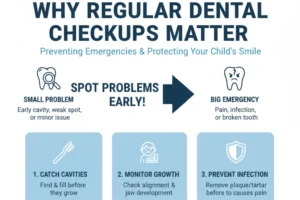
Some people think you only need the dentist if something hurts. But that’s actually the opposite of how to stay out of trouble. Dr. Susan says that regular checkups are one of the best ways to prevent emergencies because your dentist can spot small problems before they turn into big ones. That means fewer surprises, less pain, and less stress for you and your family.
Kids in neighborhoods like Houghton and North Rose Hill often come in every six months just for cleanings and checkups. During those visits, the team checks for weak spots, early cavities, or issues with how teeth are growing. It’s fast, easy, and helps you stay ahead of problems so your teeth stay strong.
The truth is, most big dental issues start out really small. When you visit the dentist regularly, it’s like catching a rain leak before it becomes a flood. So don’t wait until it hurts, get ahead of it!
What to Watch for: Signs You Might Be at Risk
Even if everything feels okay, there are signs your teeth might be heading for trouble. Here are some things to notice and talk to your dentist about:
- Teeth that feel extra sensitive or hurt when you chew.
- Gums that bleed when you brush or look red and swollen.
- Bad breath that doesn’t go away, even after brushing.
- A chipped tooth or spot that suddenly feels rough.
- Jaw pain, popping sounds, or trouble opening your mouth.
If you notice any of these, it doesn’t mean you’re in trouble yet. But it’s a good reason to check in with Dr. Susan Kim’s team. Catching things early means less pain and faster, easier fixes.
Your Healthy Smile Starts with Good Habits
Keeping your teeth safe isn’t about being perfect, it’s about building habits that work every day. From the foods you eat to the way you brush and floss, each choice helps you avoid emergencies. And when you add in regular visits to Evergreen Pediatric & Airway Dentistry, your smile gets the care it needs to grow strong.
Dr. Susan Kim and her friendly team help families all over Kirkland learn how to protect their teeth and feel confident about their health. If you’re ready to make dental emergencies less likely and healthy habits more fun, we’d love to meet you.
Call our office today and let’s keep your smile safe, happy, and ready for anything.
Frequently Asked Questions
Can eating healthy snacks really help prevent dental emergencies?
Parents often focus on brushing but overlook how snacks affect broken teeth and cavities.
What they should ask instead: How do my child’s daily snack choices lower (or raise) their risk for future dental emergencies?
- Immediate Insight: Yes. Tooth‑friendly snacks like apples, carrots, and cheese support strong teeth and gums, while sticky, sugary snacks and very hard foods are more likely to lead to cavities, cracks, or broken fillings.
- Supporting Context: The ADA notes that frequent sugary snacking and sipping feeds cavity‑causing bacteria, while crunchy fruits/veggies and calcium‑rich foods (like cheese and yogurt) help clean teeth and remineralize enamel.
- Deeper Implication: Choosing water, fresh produce, dairy, and nuts instead of sticky candies, chips, or constant sweets is a practical way to prevent many emergencies before they start.
How often should kids get a dental checkup?
Regular visits catch problems early, before they turn into painful, after‑hours emergencies.
What they should ask instead: How often should my child see the dentist to prevent surprise dental crises?
- Immediate Insight: Most children should see a dentist about every six months, starting by their first birthday or within six months of the first tooth erupting.
- Supporting Context: The American Academy of Pediatric Dentistry’s periodicity schedule recommends twice‑yearly exams and cleanings (or more often if a child is high‑risk) so dentists can monitor growth, coach hygiene, and treat small issues early.
- Deeper Implication: Sticking to that six‑month rhythm greatly reduces the chances that tiny cavities, minor trauma, or early gum problems will escalate into true emergencies.
Are mouthguards really necessary for sports?
One accident can undo years of healthy habits in a single play.
What they should ask instead: Which sports need mouthguards, and what type offers the best protection?
- Immediate Insight: Yes, mouthguards are strongly recommended for contact and many non‑contact sports because they significantly reduce the risk and severity of broken teeth, tooth loss, and lip or jaw injuries.
- Supporting Context: The AAPD and ADA state that a properly fitted mouthguard (ideally custom‑made or well‑adapted mouth‑formed) offers better comfort and protection than stock guards, making kids more likely to wear them consistently.
- Deeper Implication: Making a mouthguard part of your child’s standard sports gear, like helmets or shin guards, is one of the simplest, most cost‑effective ways to avoid traumatic dental emergencies.
What should I do if my child has a small toothache?
“Small” toothaches are often the first warning sign of decay, cracks, or infection.
What they should ask instead: How soon should I act on a mild toothache, and who should I call first?
- Immediate Insight: Don’t ignore it. Call your pediatric or family dentist and schedule a prompt exam, even if the pain comes and goes, early treatment prevents bigger emergencies.
- Supporting Context: The ADA and pediatric resources emphasize that tooth pain in children almost always has a cause, such as cavities, trauma, or erupting teeth; a dentist can diagnose and treat the problem before it reaches the nerve or causes infection.
- Deeper Implication: Treat over‑the‑counter children’s pain medicine only as a temporary measure, not a solution, professional evaluation is what keeps a “small toothache” from turning into a sleepless‑night emergency.